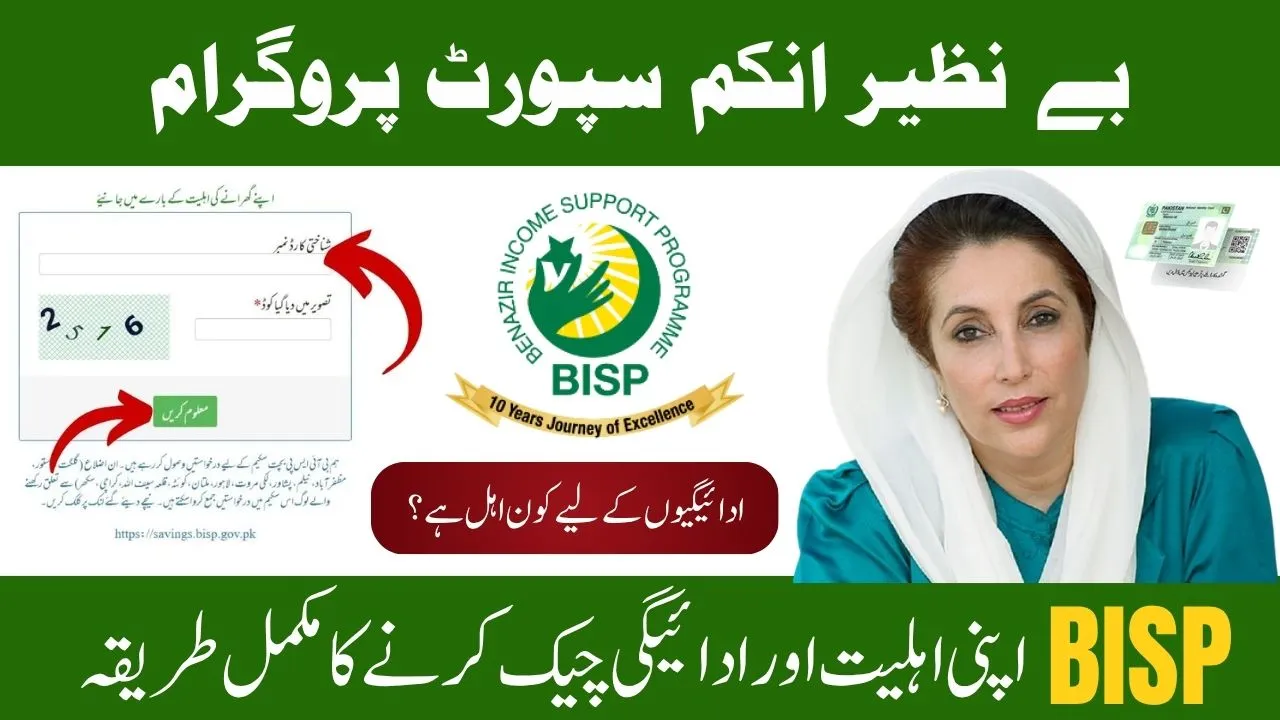
Understanding Eligibility for This Month’s Support
From my years keeping tabs on Pakistan’s social safety nets, I’ve witnessed firsthand how the Benazir Income Support Programme (BISP) transforms lives amid economic hardships. As of October 2025, with payments kicking off on October 04, 2025, the 8171 payments are targeting eligible families through the Ehsaas program, zeroing in on low-income households, women-headed families, disabled individuals, and flood-affected communities. If you’re registered in the 8171 database holding a verified CNIC and fitting the updated poverty criteria after household verification, you’re set for the bumped-up Rs. 13,500 installment. This isn’t random aid—it’s crafted to tackle education, food, and health needs for children, while boosting women’s roles and shielding vulnerable populations in rural and urban zones nationwide. Speaking to recipients I’ve connected with, this cornerstone welfare scheme from the government cuts through daily grind without endless hoops.
- Special priority groups spotlight women for empowerment and financial security, the disabled for social protection, and those in disaster-hit regions for rehabilitation aid.
- Eligibility pivots on the NSER survey or maintaining an active record in the system, channeling support to genuine need.
- It’s a no for government employees or pensioners—the emphasis stays on families under the poverty threshold with a valid CNIC.
- Stay sharp by keeping info updated to sidestep disqualifications; it’s rooted in solid, verified data.
The New Disbursement System and How It Works
Drawing from global aid evolutions I’ve studied, the BISP’s refresh for October 2025 is a savvy move, phasing out camp sites in favor of authorized shops, partner banks, and the innovative cluster distribution to curb crowding, fraud, and delays. Now, disbursement channels include bank transfers, mobile wallets such as JazzCash or Easypaisa, and neighborhood retail shops, fitting seamlessly into rural and urban routines.
- Districts are bundled into clusters paired with entities like Habib Bank Limited (HBL), Bank of Punjab, or Habib Microfinance, with staggered releases—for example, areas like Rawalpindi, Jhelum, Attock marked as released, while Multan, Khanewal, Muzaffargarh are in progress, and others pending.
- The flow starts with biometric verification via your original CNIC, guaranteeing the full sum minus any unauthorized deductions, topped off with a receipt for records.
- Hit a delay? Double-check your mobile number against NADRA or drop by a BISP office—steer clear of sketchy agents.
- This framework amps up transparency via Ehsaas survey insights, honing in on poverty-affected spots with perks like faster payments and secure transactions.
Checking Your Payment Status Easily
In my experience advising on these schemes, verifying upfront is key to avoiding headaches. For the BISP 8171 October 2025 payment status, you’ve got user-friendly, zero-cost avenues amid the Phase 3 rollout.
- Fire off your 13-digit CNIC through SMS to 8171 for swift confirmation on eligibility plus your designated shop or bank.
- Digitally, navigate to the official BISP website or portal, enter your CNIC under Payment Status for immediate insights.
- Prefer voice? Call the helpline at 0800-26477 for custom support on CNIC problems, shop locations, or hurdles.
- Insider advice: Refresh your mobile number for SMS alerts and ensure an active bank account to bypass glitches; this cycle favors targeted beneficiaries via payment modes like direct deposits and wallet integration trials, slashing reduced delays and boosting greater accessibility.
Benefits of the Revamped System
I’ve tracked how such overhauls elsewhere build confidence and uptake, and BISP’s tweaks nail practical demands—no more massive gatherings at camps, instead offering secure payments, home-near convenience for households, and prompt distribution free of mismanagement.
- It clamps down on fraud and cash-handling risks across urban and rural regions for top-notch efficiency.
- Weaves in women’s empowerment, disability inclusion, and disaster relief under the Ehsaas social protection initiative for true equity.
- Per my observations, thriving hinges on verified records and tips like updating CNIC details or leveraging the portal to pinpoint the nearest authorized outlet.
Important Tips and Common Issues
To round this out based on patterns I’ve noted in welfare distributions, here are hands-on pointers for a smooth October 2025 experience, especially with digital wallet holdups noted recently.
- Always tote your original National Identity Card and insist on biometric checks to snag the full Rs 13,500 without cuts.
- Facing biometric, deduction, or SMS issues? Hit the 8171 portal, reconfirm with NADRA, or reach BISP directly—zero tolerance for illicit shares.
- Track phased drops per district lists; if yours is delayed, it’s likely part of the organized rollout for better order.
- Pro move: Register and stay active in the Kafalat program if eligible, as this ties into broader support like the government’s hiring of new financial institutions for seamless future payouts.
Frequently Asked Questions (FAQs)
Drawing from common queries I’ve fielded on programs like BISP, here’s a quick rundown to clear up doubts for October 2025 payments.
Who qualifies for the BISP 8171 October 2025 payment?
You’re eligible if your household is low-income, registered in the 8171 database, meets updated poverty criteria, and holds a verified CNIC. Priority goes to women-headed families, disabled individuals, and flood-affected communities, but not government employees or pensioners.
How much is the payment amount this month?
The installment is Rs. 13,500 per eligible family, upped to help with education, food, and health needs for children under the Ehsaas program.
When will the October 2025 payments be released?
As of October 04, 2025, Phase 3 distributions have started, with staggered releases via clusters—some districts like Rawalpindi are already released, others in progress or pending.
How do I check my payment status?
Use SMS by sending your 13-digit CNIC to 8171, visit the official BISP website portal, or call the helpline at 0800-26477 for confirmation on eligibility, shop locations, or CNIC problems.
What if I face issues like delays or deductions?
Recheck via the 8171 portal, update your mobile number with NADRA, or contact a BISP office. Avoid agents; ensure biometric verification for full secure payments without illegal cuts.
How has the disbursement system changed?
No more camp sites—now it’s shop-based payments, bank transfers, and mobile wallets like JazzCash or Easypaisa for convenience, reduced crowding, and better transparency in rural and urban areas.
Conclusion
Reflecting on my deep dives into welfare initiatives like this, the BISP 8171 rollout for October 2025 stands out as a lifeline for millions, blending financial assistance with smart updates for efficiency and equity. By prioritizing vulnerable groups through the Ehsaas social protection initiative, it not only eases immediate burdens but fosters long-term empowerment—from women gaining financial security to disabled folks accessing social protection, and flood-affected areas getting rehabilitation. If you’re eligible, act fast to verify and collect your Rs. 13,500 via the new secure systems; in my view, staying proactive with CNIC updates and official channels ensures you don’t miss out on this vital support.